Suzuki GSX-R1000 (2009 - 2011): Review & Buying Guide


By Jim Moore
Bike journo for a quarter of a century
23.12.2025


£4500-£6000
182bhp
205kg (wet)
4.5/5
Suzuki’s GSX-R1000 burst onto the superbike scene in 2000 with huge intent, immediately swiping Yamaha’s R1 aside and kicking Honda’s by then ageing CBR900RR into the long grass. From then the big Gixer’s fortunes have ebbed and flowed, navigating the arrival in 2004 of Kawasaki’s bonkers ZX-10R and Honda’s sublime first time 1000cc Fireblade.
By 2009 the litre superbike class was on the cusp of a technological revolution with the introduction of rider aids as power crept over the 180bhp mark. As such the K9-L1 1000s represent the last hurrah for analogue GSX-Rs. Sure, these models feature early incarnations of SDMS (Suzuki Drive Mode Selector), a mode selection system that allows riders to vary power delivery, but standard fitment ABS, anti-wheelie, traction control and multi-axis IMUs were still a few years off. With a claimed 182bhp on tap, however, the K9-L1 models still pack one hell of a punch.
What’s more, by 2009 Suzuki had really got into its stride with its largest capacity GSX-R – helped in no small part by the bike’s participation in superbike racing across the globe. While it may have lacked outright tech compared to Yamaha’s then new big-bang R1, and the all new from-scratch Fireblade, the GSX-R1000 offered big thrills from a well refined and steadily developed package that still impresses today.
Back in 2009 one of these Suzukis would set you back £10K, but today you can have one in your garage – a good one – for less than half that amount. Given that current 1000s will set you back anything from £17k - £30K yet not be that much faster or thrilling on the road, if at all, that makes the K9-L1 era GSX-R1000s a bargain worth hunting down if you’re not yet ready to give up grinding knee sliders to atoms.
Pros & Cons
Immense performance from strong, race-proven motor. Claimed 182bhp
Still looks modern, even compared to the 2026 GSX-R1000
Sweet handling chassis and decent quality stock suspension
Finding a stock, unmolested example is getting harder
Ex-race and track bikes are fairly common, as is the associated damage
Overall finish can be a bit of a letdown – thin paint and plating
Suzuki GSX-R1000 (2009-2011) - Prices
2009 GSX-R1000K9
Third generation GSX-R1000 and all-new model, featuring Showa Big-piston BPF forks. 182bhp; 205kg wet weight. Colours: blue/white, white, black/maroon
2010 GSX-R1000L0
New colour options and model code changed to L0. Colours: white/black, white/bronze/black
2011 GSX-R1000L1
Colour changes only. Colours: white/blue, black/bronze
GSX-R1000K9-L1 values:
Rough: £3300 - £4200
Tidy: £4500 - £5100
Mint: £5300 - £6000


Suzuki GSX-R1000 (2009-2011) - Engine & Performance
The step from K8 to K9 GSX-R1000 involved the development of a completely new powerplant. Suzuki’s main aim with this project was to squeeze the K9’s engine into a smaller space, thus allowing for a longer swingarm to give greater high-speed stability. To achieve this Suzuki shrunk the length of the K9’s motor by an impressive 60mm, mainly by reducing the distance between the crank and gearbox output shaft – a cue taken from the already redesigned 600 and 750 models.
Changes were made to the top end architecture, too. An extra 1mm in bore size and a 1.7mm reduction in stroke increased overall capacity by 0.2cc (to 998.6cc), while redesigned piston crowns allowed compression to be raised from 12.5:1 to 12.8:1. Valves (still titanium) were also increased, by 1mm, giving a claimed output of 182bhp and a 81lb.ft.
Taming that level of performance wasn’t easy, especially without traction or wheelie control, but an early version of Suzuki’s SDMS switchable power mode system (debuted on the K7 model) allowed riders to select three power settings: A for full, unrestricted performance; B for a slightly less aggressive delivery until near full throttle; and C, a significantly gentler programme for wet or low grip conditions.
Changing the internal architecture to a shorter stroke design was done for racing; short stoke engines can achieve higher rpm and therefore ultimately produce more power. Although still immensely powerful, and torquey, the K9-L1 engines lack the underpinned forceful grunt that made GSX-Rs from K5-K8 spec so special. That said, you’d really need to ride them back-to-back to feel the difference and overall performance from a K9-L1 remains impressive. Fitting a power commander and a pipe makes a noticeable difference, too.


Suzuki GSX-R1000 (2009-2011) - Handling & Suspension (inc. Weight)
This era GSX-R1000s offer more than suspension adjustment for a rider to tweak the bike to their liking. The standard footrests offer three-way adjustability – perfect for achieving more relaxed positioning for the road as well as greater ground clearance and control on track.
Suspension is Showa front and rear: fully adjustable Suzuka 8-Hr developed BPF Big Piston forks upfront (the first large capacity sports bike to feature them); the theory being that a larger piston inside the forks provides greater and more consistent damping control in extreme (read track) conditions.
The K9’s shock, also Showa, runs both low and high-speed compression adjustment for more accurate set-up. By now, however, with K9s being 17 years old, many will have benefitted from the fitment of a quality aftermarket shock or had the original rebuilt.
Suzuki’s aim with the K9 chassis was to improve stability without compromising the bike’s ability to hit an apex. Like the engine, the twin-spar aluminum chassis was made more compact than the K8 model, while a 32mm longer banana style swingarm was fitted despite the wheelbase being trimmed by 59mm to a positively stumpy 1405mm.
Braking performance from the twin 310mm discs and 4-pot radially mounted Tokico calipers was criticised from new by some testers on account of the set-up’s habit of fading when pushed hard on track, despite the claim that the calipers beat the previous model’s both in terms of overall stiffness and lightness (by a claimed 200g per side).
As a road bike the K9-L1 GSX-Rs work very well. Roomy ergonomics (despite the modest wheelbase) provide larger riders with space to move about, but pillion accommodation is Spanish inquisition-spec and only a sadist would insist someone plonk themselves on the postage stamp sized rear perch.


Suzuki GSX-R1000 (2009-2011) - What to look for
Finish:
Not the best, even in class. Thin paint and even thinner plating on fasteners and brackets are prone to stone chipping, leading to tatty looks and an invitation for corrosion to take hold where it can.
Throttle Position Sensor:
Known to fail – you’ll get a warning light flash on the dash, so any issue should be apparent. Poor running and snatchy throttle response are other tell-tale sign that all is not well with the TPS.
Gearbox:
GSX-Rs and wheelies have always gone together like strawberries and cream, but ham-fisted monos can cause havoc with the engagement dogs on the gearbox ratios. Take a test ride to check that the bike still holds gears under load – particularly second and third. Clunky head bearings can be another casualty from poorly executed wheelies, so check that the steering’s not notchy or loose.
Service history:
Essential on any high-performance machine. Given the age of K9-L1 models, it’s likely than many examples will have been home serviced for the last decade. Ask the owner for proof of service – when and what’s been carried out. Oil changes should be every 4000 miles, plugs and air filter every 8K, and valve clearance inspection every 16,000 miles.
Front brakes:
Suzuki issued a recall in 2013 for all 2004-2013 GSX-R1000 models due to complaints of spongy front brakes. The problem was caused by moisture damaging the mastercylinders’ return spring, then replaced under the recall. Check that any potential purchase has had this done.
Engine:
Generally very reliable, particularly when serviced to the letter, but some owners have reported crankshaft failure on some K9 models. If looking at an early example that’s been used for trackdays, ask about the crank.
Suzuki GSX-R1000 (2009-2011) - Rivals
Honda CBR1000RR Fireblade - Second generation CBR1000RR made mass-centralisation its mantra, with a stubby under-engine exhaust and a total chassis redesign from the previous model. Stub-nosed styling remains a matter of taste. Lighter than the GSX-R, with a weight wet of 199kg against 205kg, although slightly down on power at 175bhp compared to the Suzuki’s 182bhp. Despite the odd looks this era of Fireblade delivered the goods both on track and road, so should be considered serious competition to the GSX-R1000.
Kawasaki ZX-10R - Replacement for the unpopular and bloated looking ‘wheelbarrow’ era ZX-10R. Kawasaki reverted to a recipe more in keeping with earlier ZX-10Rs; light, agile, and boasting class-leading power. A riot to ride, both on road and track, and more than capable of holding the Suzuki to task in both arenas. Used values are tempting, with tidy ZXs starting slightly cheaper than rivals – decent examples can be had for as little as £3600, so well worth a sniff even if you favour GSX-Rs of the time.
Yamaha YZF-R1 - Game-changing R1 due to the introduction of Yamaha’s MotoGP derived cross-plane crank technology, given the inline R1 the beat and sound of a more tractable V4. Other new tech included ride-by-wire throttle and a completely redesigned chassis. Arguably the most tech-heavy litre superbike of its time, and a superb road and track bike as a result. Burgandy frame colour on the white model is very much a matter of, but in Yamaha racing blue this era R1 looks fabulous. Used values are higher than those of the GSX-R, but that’s a reflection of this Yamaha’s superior spec.
Honda CBR1000R Fireblade, 2009 | Approx Price: £4200-£6500

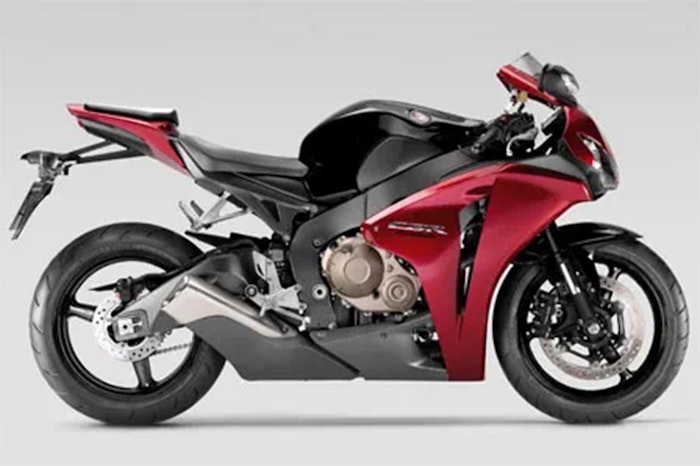
175bhp / 84.8lb-ft
179kg (dry)
Kawasaki ZX-10R, 2009 | Approx Price: £3600-£6500

188bhp / 83.3lb-ft
179kg (dry)
Yamaha YZF-R1, 2009 | Approx Price: £4000-£7200

182bhp / 85lb-ft
177kg (dry)


Suzuki GSX-R1000 (2009-2011) - Verdict
The K9-L1 era GSX-R1000s were and still are brilliant litre-class superbikes, particularly of a time just before electronic rider aids became de rigueur. Robust, well developed, and track proven, they still deliver punchy performance and effortless handling in spades – if 182bhp isn’t enough for the road, it’s time to ask serious questions of yourself. With tidy K9s starting at £4500 – and minters going for little more than £6K, experiencing superbike thrills on a budget is still very much within reach.
If you’d like to chat about this article or anything else biking related, join us and thousands of other riders at the Bennetts BikeSocial Facebook page.


Suzuki GSX-R1000 (2009-2011) - Technical Specification
| Original price | £9800 |
| Current price range | £4500-£6000 |
| Capacity | 998.6cc |
| Bore x Stroke | 74.5mm x 57.3mm |
| Engine layout | liquid-cooled, DOHC, 16v, inline four |
| Power | 182.5bhp (136kW) @ 12,000rpm |
| Torque | 86.3lb-ft (117Nm) @ 10,000rpm |
| Top speed | 186mph |
| Transmission | 6-speed, wet multi-plate clutch, chain drive |
| Average fuel consumption | 38 mpg |
| Tank size | 17.5 litres |
| Max range to empty (theoretical) | 142 miles |
| Reserve capacity | n/a |
| Rider aids | SDMS rider modes |
| Frame | aluminium beam |
| Front suspension | 43mm Showa forks |
| Front suspension adjustment | Rebound damping |
| Rear suspension | Showa monoshock |
| Rear suspension adjustment | fully adjustment |
| Front brake | 2 x 310mm disc, 4-pot caliper |
| Rear brake | 220mm disc, 1-pot caliper |
| Front tyre | 120/70 ZR 17 |
| Rear tyre | 190/50 ZR 17 |
| Rake/Trail | 23.9°/98mm |
| Dimensions (LxWxH) | 2045mm x 720mm x 1130mm |
| Wheelbase | 1405mm |
| Ground clearance | 130mm |
| Seat height | 810mm |
| Wet weight | 205kg |

Getting a motorcycle insurance quote with Bennetts is easy.
We compare prices from our panel of top-tier insurers, to find riders our best price for the cover they need. With common modifications covered as standard, our policies are rated Excellent on Trustpilot and 5 stars by Defaqto. We are an award-winning UK broker, with a UK-based contact centre and 24/7 claims support.
Buy direct or renew at bennetts.co.uk, or via our contact centre, to gain access to a free BikeSocial Membership - unlocking discounts on kit, tyres, training, and exclusive customer-only VIP experiences.


